A coffee table is easy to choose from a room photograph and surprisingly easy to get wrong in your own home. The useful starting point is not the finish. It is the space between the seats, the route people walk through the room and what you need to keep within reach.
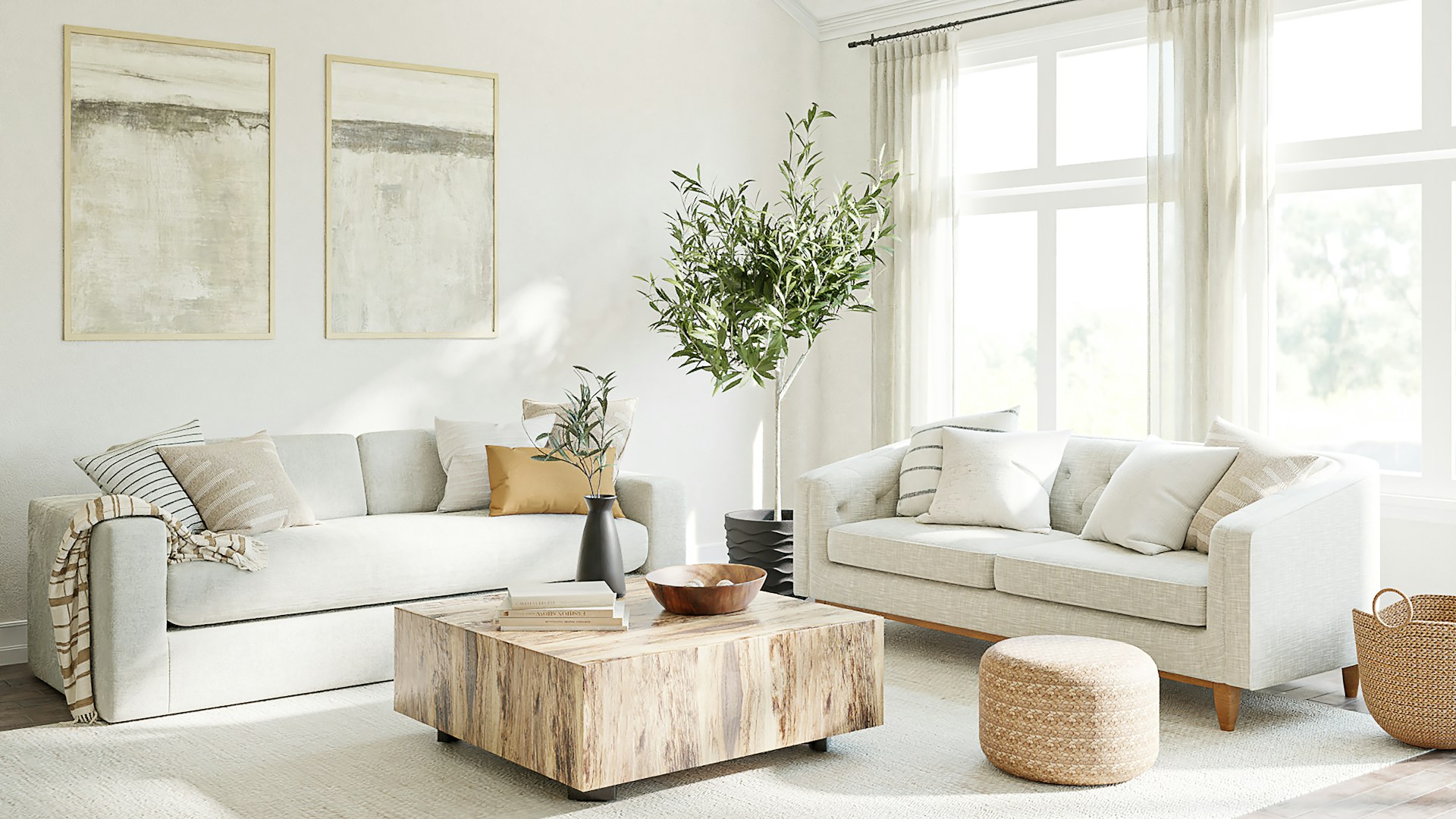
Start with the room in use
Arrange the sofa and chairs as you normally use them before measuring for the table. Open any nearby doors and drawers. Include the route to a balcony, the space someone uses to get up from an armchair and any footstool or reclining mechanism. The apparent gap in an empty room is not necessarily the space available during an ordinary evening.
Mark a proposed tabletop on the floor with removable markers suitable for the surface. Walk around it, sit down and get up, and try the route while another person is seated. This makes the trade-off between a generous top and comfortable movement much clearer than a product photograph can.
Compare the whole footprint
Check width, depth and height together. Two tables with the same width can occupy noticeably different amounts of the room when their depths differ. Splayed legs can also extend beyond the top, so check the manufacturer’s overall dimensions rather than assuming that the tabletop measurements describe every part of the furniture.
The sofa’s seat height provides useful context for the table height. A lower table may look light in the room but be less convenient for the way you use it. A higher table may be easier to reach from one seat and awkward from another. There is no need to treat a single styling rule as more important than the people and furniture already in the room.
Choose storage around actual objects
Open shelves keep a book, basket or remote easy to reach, but their contents remain visible. Drawers conceal smaller items and need space to open. A lift-top or storage-lid design adds another clearance requirement: check where the moving top travels and whether the mechanism is suitable for the way the table will be used.
Measure the object you want to store, not just the cabinet. A 100 cm-wide table does not have a 100 cm-wide drawer. Framing, runners, partitions and the shape of the legs all affect usable space. Where internal dimensions are absent, avoid treating an external measurement as a guarantee of capacity.
Understand the material description
Solid wood, wood veneer and a wood-effect surface describe different constructions. Look for a clear explanation of the top, frame and legs rather than relying on a colour name such as oak or walnut. A wood-effect finish can give a coordinated appearance without being made from that species of timber.
Follow the care instructions for the actual surface. Do not assume a decorative coating will tolerate heat, standing water or abrasive cleaning because another table in a similar finish does. Glass, painted and laminated surfaces bring different care requirements, and a product’s load rating should not be interpreted as permission to sit or stand on it.
Check the exact offer before ordering
Match the model, finish, size and included pieces on the selected retailer listing. A styled photograph may include side tables, baskets and decorative objects that are not supplied. Check assembly requirements and whether the packed furniture can follow your delivery route into the room.
Use the coffee-table collection to compare the information available for individual products. Keep the options that fit your room on a shortlist, then check Amazon for the current seller, price, delivery and returns arrangements. Our editorial approach explains the difference between researched product information and hands-on testing.
Room photograph: Spacejoy / Unsplash. It illustrates a layout, not a claim that every object shown is included with a catalogue product.