Portable wardrobes can provide flexible storage, but the useful capacity depends on clear hanging space, shelf layout and how much room the fabric cover needs to open. Check both the assembled footprint and the space needed to build the frame.
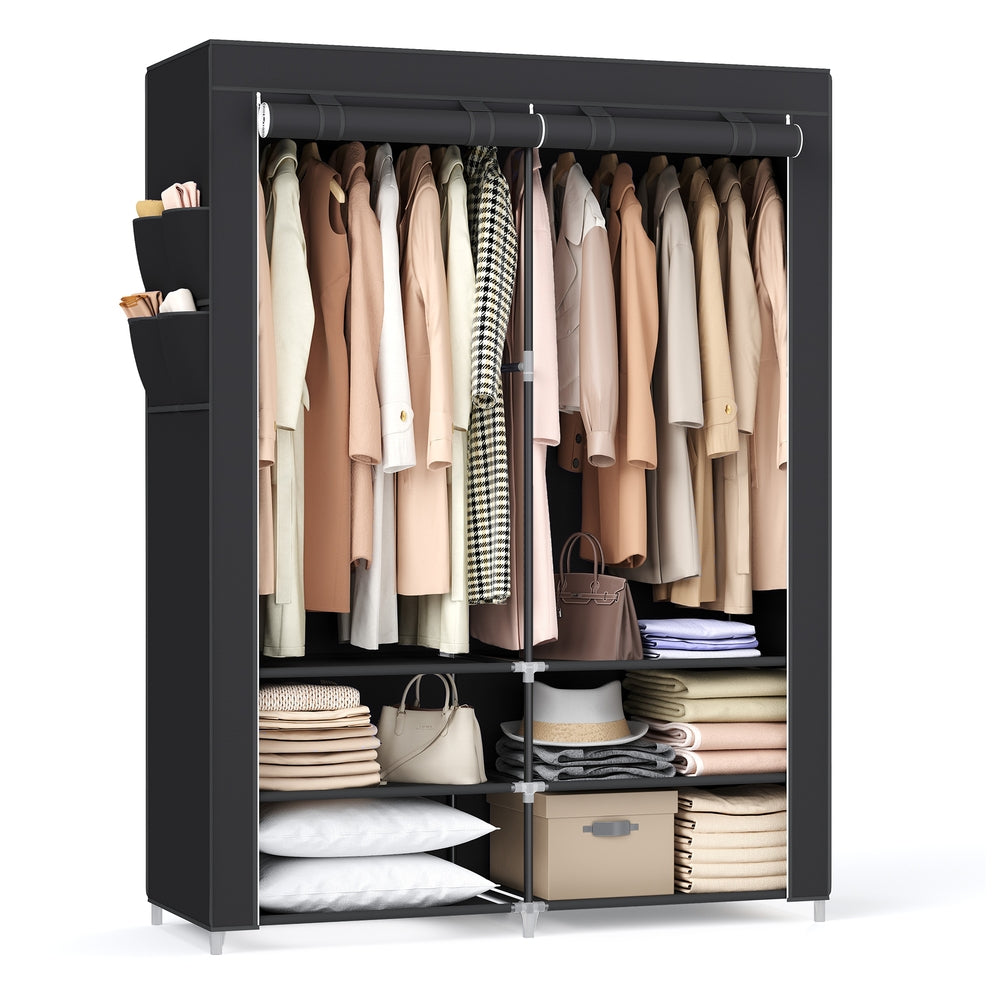
Measure the external footprint
Check width, depth and height at the widest points. Fabric covers and feet can extend beyond the internal frame. Leave a little clearance at the sides so the cover and frame do not rub against a wall or adjacent furniture.
Measure hanging space
Compare rail width and garment drop with the clothes you intend to store. Lower rails or shelves reduce the space available for long coats and dresses. For two-rail layouts, measure shorter garments on hangers and confirm the clear drop beneath each rail.
Check shelf dimensions
Storage boxes need enough width and depth to sit securely on the shelves rather than projecting through the fabric cover. Follow the separate load guidance for rails and shelves, and spread weight evenly.
Allow the cover to open
Roll-up, zipped or curtain-style fronts need clear access in front of the wardrobe. Make sure you can reach the opening without moving a bed or blocking a doorway.
Think about stability and assembly
Follow the manufacturer’s loading and securing instructions. Keep heavier items lower and distribute weight evenly. Measure the room where you will assemble the wardrobe: tall frames can be awkward to raise beneath a low or sloping ceiling.
Example: SONGMICS UKRYG008B02
The SONGMICS portable wardrobe with two hanging rails is listed as a 127 cm-wide black configuration. Its product page cross-matches model UKRYG008B02 and links directly to Amazon UK ASIN B09R1YN4G1. Check that the selected Amazon offer still matches the same model and configuration, and confirm current retailer details before purchase.
Browse our wardrobes and compare permanent and portable options.
Check the frame before loading it
Portable wardrobes often use lightweight tubes and fabric shelves, so useful capacity is governed by the manufacturer’s load guidance as well as the number of rails. Spread heavier garments and boxes rather than concentrating weight in one section, and do not treat a fabric shelf like a rigid timber shelf.
Plan assembly space
Measure the room where the wardrobe will be assembled, not only the final position. Tall frames can be awkward to raise beneath a low or sloping ceiling. Once assembled, leave enough space to reach zips, curtains and side pockets without dragging the unit away from the wall.