Clothes-rail capacity is not just a question of how many hangers fit across the bar. Garment thickness, usable rail width, hanging height, the base footprint and the stated load limit all matter. Use the maker’s specifications for the exact model: a styled photograph is not a safe load test.
Quick answer: how many clothes will fit?
There is no dependable clothes-per-metre figure for every wardrobe. Capacity is whichever limit you reach first: usable hanging width, garment drop or the exact model’s weight limit. Thin empty hangers are not a useful stand-in for a row of winter coats.
Measure usable rail width
Use the clear hanging length between supports. The overall furniture width may include side frames, shelves or handles that do not contribute to hanging capacity. Measure your wardrobe hangers and estimate space using the bulkiest garments you plan to store.
Allow for garment thickness and drop
Shirts and lightweight clothes pack much more closely than winter coats. Measure long dresses and coats on their hangers; shelves or shoe racks beneath a bar can reduce usable vertical space. Leave enough clearance that hems do not drag or fold over stored items.
Respect the manufacturer’s load limit
A rail can look large enough for more clothes while still being overloaded. Follow the stated load guidance for the rail and any shelves separately, and distribute heavier items evenly. Do not treat a retailer photograph or a general clothes-per-rail estimate as a weight rating.
Check the base footprint and stability
Wheels and stabilising feet may extend beyond the vertical frame. Measure the widest point at floor level, especially in a narrow room, and check whether wheels lock or the model is designed to remain stationary while loaded.
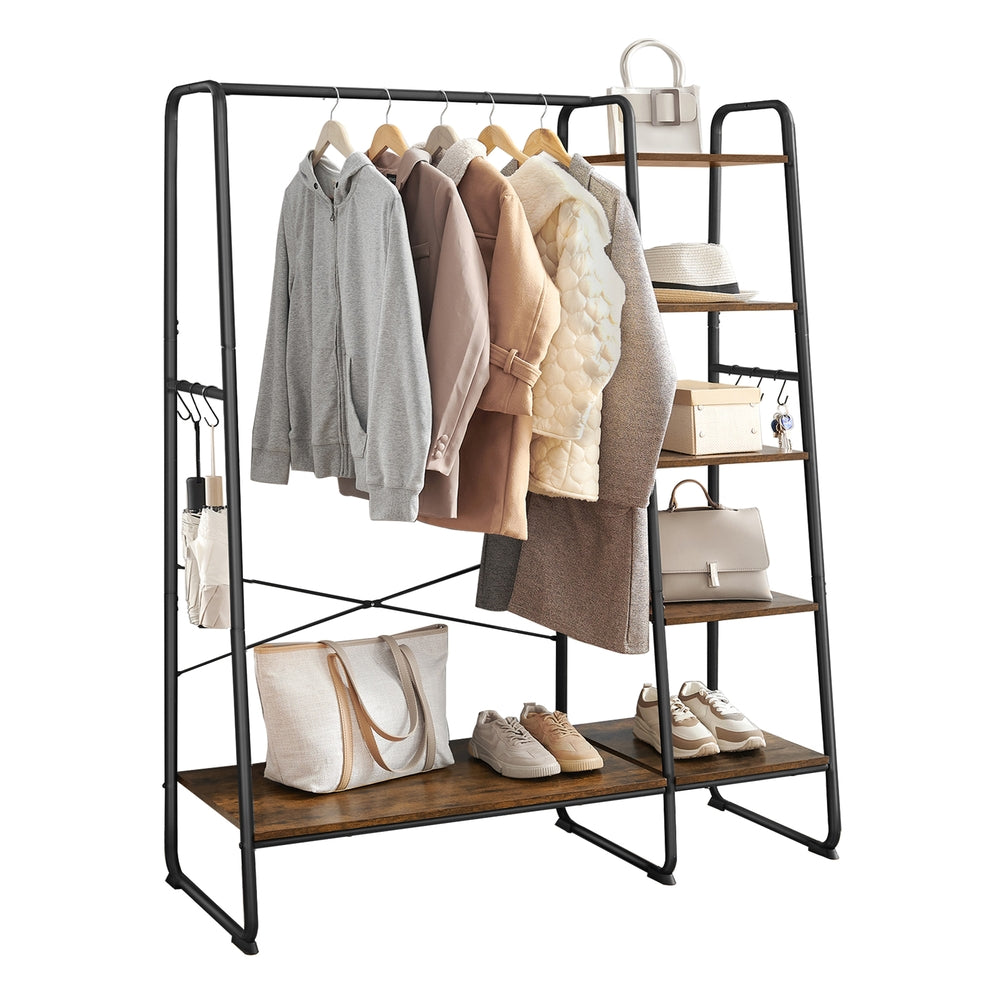
Example to compare: VASAGLE B34UKRGR116B01
The VASAGLE open clothes rail with lower shelves has a verified model reference of B34UKRGR116B01. Its product page directs shoppers to the manufacturer for current width, shelf depth, height and load guidance; check those details for the exact variant before deciding whether it fits your garments and space.
Browse our clothes rails for current models, and compare each model’s usable hanging span, load guidance and overall footprint before choosing.
Make an estimate using your own clothes
- Hang a representative group together without compressing it. Include the same mix of shirts, coats and jackets you intend to store.
- Measure the occupied length. Divide that length by the number of garments to get your sample’s average space per garment.
- Divide the proposed rail’s clear usable span by that average. Round down and leave practical room to remove garments.
- Check the longest hanging item and the manufacturer’s weight limits separately. The space calculation does not establish a safe load.
A worked space estimate—not a load rating
If ten of your garments occupy 40 cm, that sample averages 4 cm each. A clear 100 cm hanging span would give a theoretical 25 garments of the same mix before allowing handling space. That is only arithmetic for that sample: bulky coats, hangers or a different garment mix change the answer. It does not mean a particular rail can safely carry 25 items.
Write down three limits for each model
- Space: clear hanging length and free drop beneath the bar.
- Weight: the limit for the actual bar configuration, plus separate shelf limits.
- Use: whether extensions, wheels or movement while loaded have restrictions.
Never substitute a higher whole-unit load for a lower shelf or extension limit. If the instructions do not state a limit clearly, ask the maker before loading it.
For broader dimensions and a catalogue example, use our clothes-rail size guide. If the storage also needs to hide bedding or folded clothes, compare a rail with a wardrobe before adding extra furniture.