Sideboards of similar outside dimensions can offer very different usable storage. Door layout, shelf positions, drawer depth and internal dividers matter more than a photograph of the closed cabinet. Measure the items you intend to store and compare the usable openings, not only the exterior.
Plan the internal contents
List the largest items you want to store and compare them with shelf openings and cupboard widths where those measurements are available. Include enough clearance to lift objects out without scraping them against a shelf above.
Allow doors and drawers to open
The closed cabinet is only part of the footprint. Check the clear floor area required in front of hinged doors and fully extended drawers. This matters in dining rooms where chairs may already occupy the same clearance zone.
Use adjustable shelves deliberately
Adjustable shelves can reduce wasted vertical space, but check how many positions are actually available and whether any central shelf is fixed. Measure tall dishes, books or appliances first instead of assuming an adjustable layout will fit them.
Treat the top as useful space
If the sideboard will hold a lamp, coffee machine or serving dishes, check usable depth and any published load guidance. Keep hot or heavy items within the manufacturer’s stated limits.
Worked example: VASAGLE UKLSC095B01
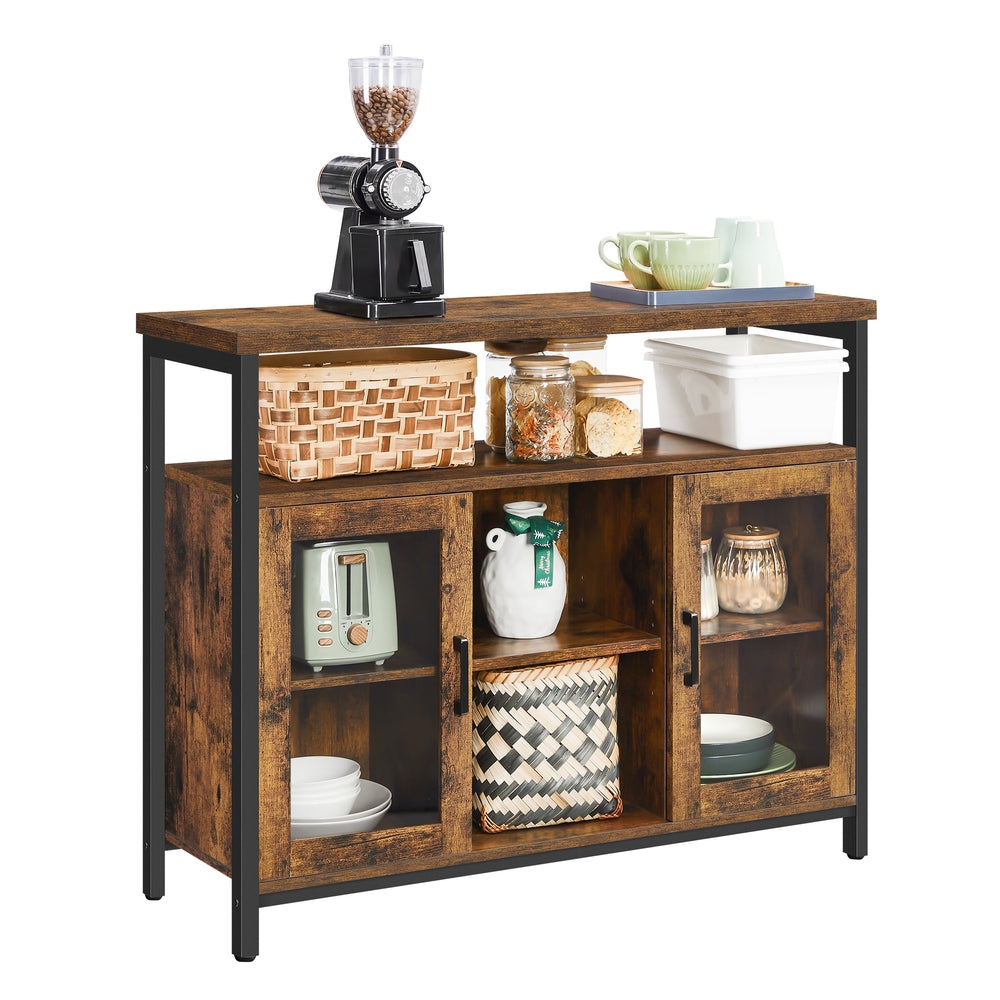
The VASAGLE sideboard with adjustable shelves is matched to model UKLSC095B01 and links to Amazon UK ASIN B08LYHP212. Its current catalogue record does not establish the internal shelf dimensions, so verify those with the manufacturer before deciding whether a particular item will fit.
Browse our sideboards, or visit the furniture buying-guide library for more practical measurement advice.
Measure the inside before choosing by litre count
Sideboards are rarely specified by a meaningful storage-volume figure. A broad cupboard can still be awkward for tall plates or appliances if a fixed shelf sits in the wrong place. Measure the largest object you intend to store and compare its width, height and depth with the usable opening.
Check the room while the sideboard is open
Mark the cabinet footprint, then add door swing and drawer extension. This matters particularly in dining rooms where chairs may already occupy the same clearance zone. Sliding doors can help in tighter layouts, but only if the internal access width suits the items you store.