This page contains Amazon affiliate links. As an Amazon Associate I earn from qualifying purchases.
An open clothes rail is simple furniture, but a few measurements determine whether it works well. The outside width tells you where it fits; usable rail width tells you how much can hang; and the distance from the rail to the floor determines whether longer garments clear shelves, shoes or storage boxes below.
What size clothes rail do you need?
Check four separate measurements: the complete floor footprint, usable hanging width, clear garment drop and the manufacturer’s load limit. Overall rail height does not tell you whether a long coat clears a shelf.
View SONGMICS HSR11S on Amazon
An extendable model from our catalogue, not a universal fit or a hands-on recommendation. Read the measuring checklist below before choosing. Check the exact variant and current retailer terms. We may earn commission from qualifying purchases.
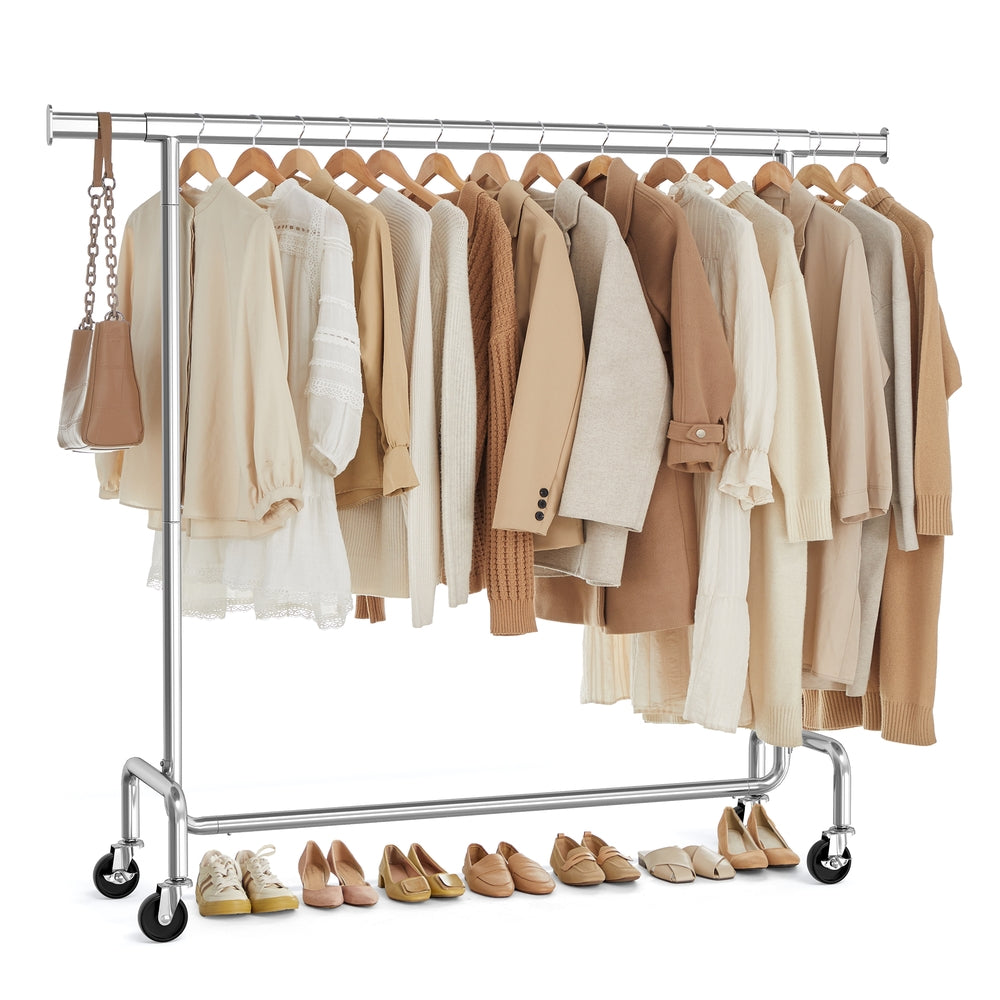
Measure usable hanging height
Take a coat, dress or pair of trousers on the hanger you normally use and measure from the top of the hanger to the lowest point of the garment. Compare that with the clear space below the hanging rail. A lower shelf can be useful for shoes, but it also reduces the hanging length available.
Outside width is not the same as rail width
Side frames, shelves and hooks can reduce the usable hanging section. If the manufacturer publishes both measurements, use the internal rail width for capacity planning and the external width for room planning.
Do not estimate capacity from photographs
Product images often show lightly spaced garments. A tightly packed rail weighs considerably more and is harder to use. Check the stated load capacity and leave some free rail space so hangers can move without pulling several garments out at once.
Check the base and floor footprint
Freestanding rails with wide feet may need more floor depth than expected. Mark the complete footprint, including projecting feet and lower shelves. On soft carpet, a narrow frame may also feel less stable than it does on a hard studio floor.
Wheels and covers change the use case
Castors are useful if the rail needs to move, but check whether they lock and whether the quoted overall height includes them. Fabric covers can keep dust away from occasional clothing, although they also increase the visual bulk of the unit and may need clearance around zips or doors.
A measured example: SONGMICS HSR11S
The current SONGMICS HSR11S clothes rail is listed with an adjustable hanging width of about 110–150 cm, a depth of about 45 cm and a height of about 162.9 cm. Its product information states a load capacity up to 130 kg. That is the manufacturer’s stated limit, not an independently tested result or a recommended everyday target; follow the maker’s assembly and loading instructions and distribute garments evenly. Check the live product details for the exact variant before ordering.
A simple hanging-height calculation
← Usable hanging width →
↓ Measure from the point where the hanger rests on the rail
Longest garment on its usual hanger
Leave clear space below the hem
Required clear drop = your garment-on-hanger drop + the gap you want below it. Measure from where the hanger sits on the rail to the lowest hem, then compare with the distance to the top of anything beneath it. Do not compare the garment length with the rail’s overall height.
For example, a garment-on-hanger drop of 128 cm plus a chosen 5 cm gap needs 133 cm of clear drop. If the clear distance above a shelf is only 125 cm, that arrangement will not fit. These numbers illustrate the calculation; they are not a universal clearance recommendation or a specification for the pictured rail.
Your clothes-rail measuring sheet
| Record this | What to include |
|---|---|
| Available floor width | The widest feet, hooks or extended rail; not just the hanging bar. |
| Available floor depth | Feet and shelves, plus garments projecting either side. |
| Clear hanging drop | Hanger resting point to the highest shelf, box or floor below. |
| Usable rail width | Space between obstructions where hangers can actually move. |
| Load limits | Separate rail and shelf ratings where supplied; follow the maker’s instructions. |
Choose the layout before the finish
A wheeled, extendable rail suits flexible layouts; a fixed rail with shelves trades some clear hanging space for folded storage. If dust cover or concealed storage is the priority, compare a wardrobe’s depth and door clearance as well. For folded clothes, our drawer-clearance guide explains the space needed in front.
Compare clothes rails and their specifications
Quick measuring checklist
- Measure the available floor width at the rail’s widest setting.
- Measure floor-to-garment clearance using the hanger and longest item you plan to store.
- Include the full base, wheels and any shelves in the floor footprint.
- Use the manufacturer’s load rating, assemble as directed and distribute weight evenly.
Compare our current clothes rails, or visit the furniture guides for more practical measurement advice.
Would a wardrobe be a better fit?
If you need concealed storage or a mixture of hanging and folded clothes, compare the complete setup before buying a rail. Our open clothes rail versus wardrobe guide weighs up usable hanging space, opening clearance and everyday upkeep.