Dining tables with benches can save visual space when stored, but the room still needs to fit the set in use: diners, pulled-out seating and a clear route around the table. Measure the occupied footprint before buying.
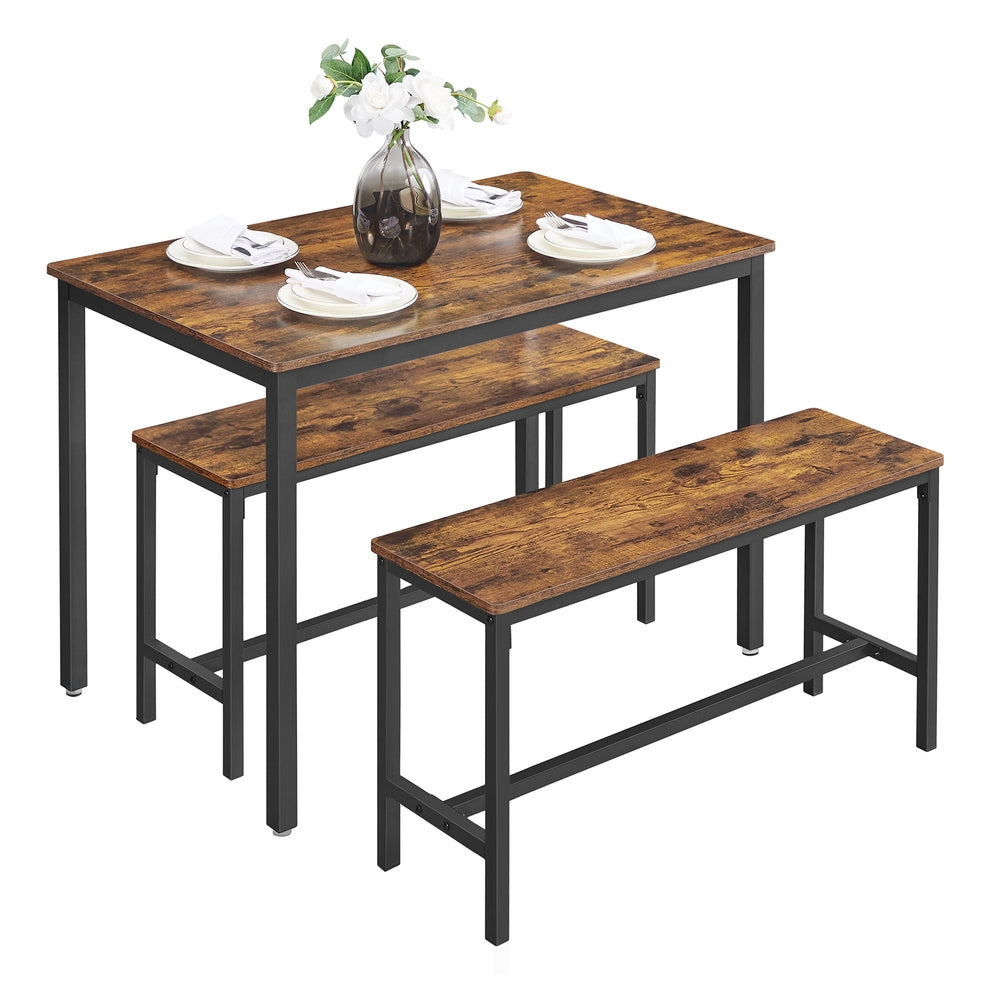
Measure the table in use
Mark the tabletop footprint, then add the depth of the benches when somebody is seated. A bench tucked underneath takes much less space than a bench in use. Keep a comfortable walking route to doorways and other furniture.
Check seat height and legroom
Compare bench seat height with the underside of the table. There needs to be comfortable legroom rather than simply enough clearance for the bench to slide underneath. Backless benches also sit and feel different from chairs with back support.
Check the bench length
A bench should fit between the table legs if it is intended to tuck away. Compare the clear space between supports, not only the tabletop width, and check how far feet or frames project beyond the seat.
Allow side access
Bench seating often requires people to slide along the seat. Leave more room at the ends if the bench is positioned close to a wall, and consider whether everyone can get in and out without moving another diner.
Confirm exactly what the set includes
Marketplace listings may group several set sizes together. Match the model reference and confirm whether the listing includes one bench, two benches or chairs as well.
Worked example: VASAGLE KDT070B01
The VASAGLE rustic-brown and black table-and-bench set is listed as a 110 × 70 × 75 cm table with two benches, each about 97 × 30 × 50 cm. The benches tuck underneath, but those stored dimensions are not the occupied space needed at mealtimes. Check the current product details and exact set contents before ordering.
Browse our dining sets and compare exact piece counts, table dimensions and seating clearance.