A folding dining table can release floor space between meals, but only if you actually fold it and have somewhere for the chairs to go. A smaller fixed table may be the simpler choice when the dining surface is used all day. Start with your routine, not the biggest advertised seating capacity.
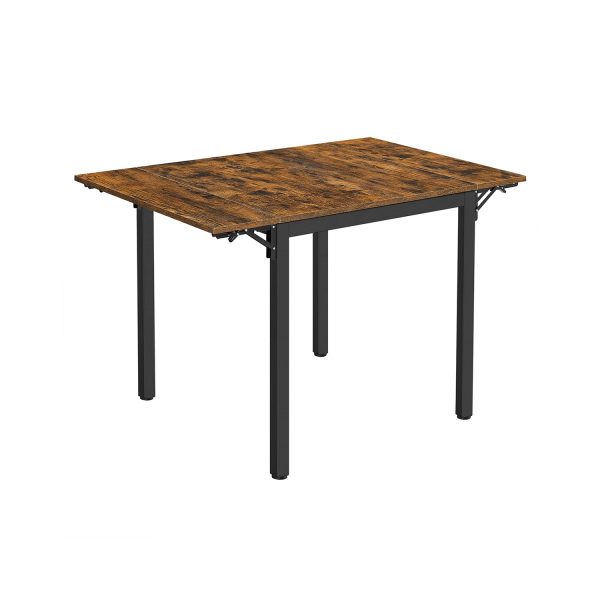
When folding is genuinely useful
Folding makes the most sense when the same floor area has two different jobs: dining at mealtimes and circulation or another activity afterwards. Check whether reducing the top changes the route you need to use. If the chair backs, a nearby cabinet or the table base remain in the way, the smaller tabletop may not solve the problem.
Think about what lives on the table. A laptop, lamp, fruit bowl or work materials must be moved before the leaves can close. That may be perfectly manageable, but it is a daily task to include in the decision. Buying a folding table and leaving it permanently open removes much of the space-saving benefit.
TEST BOTH ROUTINES
One room, two layouts to measure
Where do the chairs go?
Between meals
Mark the reduced footprint, then place the chairs where they will actually be stored. Walk the route that folding is supposed to free up.
Add occupied chair space
During a meal
Open the full outline, add the seats in use and test access past them. Include movement needed to open or support the leaves.
Illustrative layouts, not scale drawings or product specifications. Check the actual folded base and leg positions as well as the tabletop.
When a fixed table is the better compromise
A fixed table avoids changing the layout before each meal. It may suit a kitchen where the table is also a regular work surface, or a household whose daily seating needs rarely change. Compare a smaller fixed top with the folding option in its usual position, rather than comparing only their maximum sizes.
Do not assume that fixed means sturdier or folding means unstable. Construction, assembly and the manufacturer’s use instructions decide what a particular model can support. Choose the mechanism you are willing to use correctly, and check the exact model rather than relying on the furniture type.
Folding and leaf-extending are not the same decision
A folding top uses hinged sections; a leaf-extending design adds surface using its own extension mechanism. The marketing word “extendable” may describe either. Look at the actual instructions and photographs to understand what moves, what needs support and whether separate leaves need storage. Our closed-and-open table guide covers the measurement checks for changing configurations.
Four questions before you shortlist
- How often will the table change size? Include clearing the top and moving chairs in the routine you imagine.
- What is the limiting space? Identify the doorway, walkway, radiator or cupboard you need to keep accessible.
- Where are the supports? Check legs, rails and any leaf supports against the chairs in each intended position.
- Where does everything go? Plan chairs and any removable parts between uses, plus the assembly and delivery route.
Compare three catalogue approaches
- VASAGLE KDT077B01 folding table: compare the open and folded outlines, and check the leaf-support instructions.
- VASAGLE KDT081B01 fixed rectangular table: test the everyday footprint with the chairs you will use, including leg clearance.
- VASAGLE KDT080B01 round table: mark the full diameter and occupied chair positions; a curved top still takes space.
Browse the dining-table collection for published dimensions. These are researched examples, not hands-on tests or universal seating guarantees. Confirm the exact variant, current specifications, seller and delivery terms with the retailer. We may earn commission from qualifying purchases; checkout happens on the retailer’s website.