An open clothes rail should be planned around usable hanging width, garment length and the footprint of any shelves or feet. Overall furniture width alone does not tell you how much clothing will fit.
Will your clothes actually fit?
Measure the clothing first, not just the bedroom. Lay out a representative group on its normal hangers. Measure the occupied rail length without compressing the garments, then compare that with the clear hanging span of the rail you are considering.
Measure from the underside of the hanging bar to the top of the lowest obstruction. A bottom shelf can be useful for shoes but useless beneath a long coat. Allow for the hanger hook and the way the garment hangs, rather than comparing coat length with the overall furniture height.
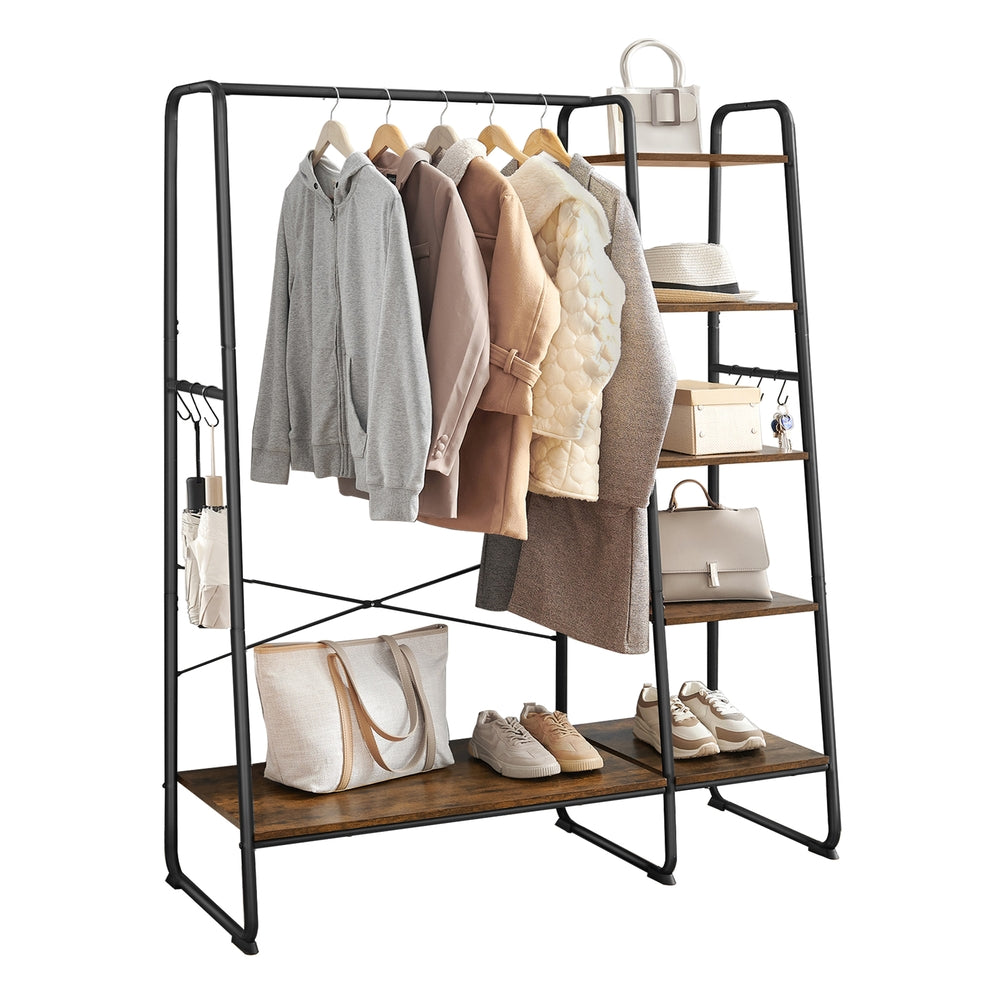
Measure usable rail width
Use the clear distance between side frames or supports. Hangers at the ends may need extra room, so the full outside width is rarely all usable hanging space.
Check garment drop
Measure long coats and dresses while they are on hangers. Lower shelves, shoe racks or drawers can reduce the vertical space below the rail.
Plan shelf storage
Compare shelf openings with the boxes, shoes or folded clothes you intend to store. Deep shelves may increase capacity but also increase the total floor footprint.
Wheels and extended feet
Castors and stabilising feet can be wider than the rail above them. Check the base footprint where the rail will sit, especially in a narrow bedroom or hallway.
Respect load guidance
A densely packed rail of coats can become heavy quickly. Follow the manufacturer’s hanging and shelf limits and distribute weight evenly.
Browse our clothes rails for current options.
For a specific rail-and-shelf combination, see the VASAGLE B34UKRGR116B01 clothes rail with storage shelves. Its page links to current retailer offers; verify the variant and current dimensions with the manufacturer before ordering.
A simple test before ordering
- Choose the longest garment and the bulkiest group you expect to store.
- Record their hanging drop and occupied width. Do not assume a fixed number of garments per metre: winter coats and shirts take different space.
- Mark the base, including feet or castors, on the floor. Try walking past it with a laundry basket.
- Check shelf loads separately from hanging-bar loads. A total capacity is not necessarily the limit for each part.
For a different layout, compare the SONGMICS HSR11S extendable rail with the shelf-equipped VASAGLE above. Extending a bar changes its footprint; check the exact manufacturer instructions and load limits in the selected configuration.
Need enclosed storage instead? Read clothes rail versus wardrobe. For a measured example and a planning diagram, use our clothes-rail sizing guide.