More storage is not always better storage. A bedroom can gain cupboards and drawers while becoming harder to use. Start with the bed, the clothes and objects you need to keep, and the routes you use every day.
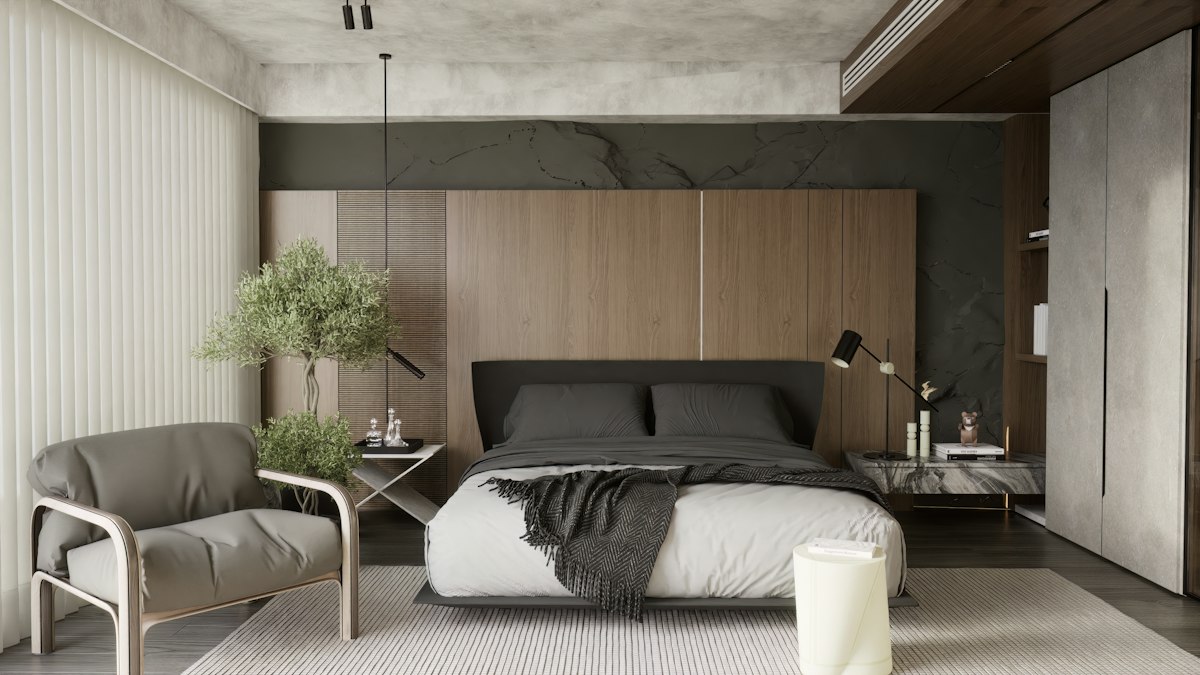
Measure the room with the bed in place
Use the bed frame’s outside dimensions, not just its mattress size. Include the headboard, any projecting legs and the way built-in storage opens. Mark doors, sockets, radiators and windows, then keep clear the routes you need to get dressed, make the bed and move through the room.
A piece of furniture may fit against the wall and still be awkward when a drawer is fully open. Test that extra space before ordering. In a narrow room, opening arrangements can matter as much as the cabinet’s closed footprint.
Choose bedside storage around mattress height
Compare the proposed bedside surface with the top of your mattress and consider how you reach it from the bed. Check the space for a lamp, book or other essentials, including the position of plugs and switches behind the furniture. A table that hides a useful socket may create an everyday inconvenience.
A drawer conceals small objects, while an open shelf keeps them visible and accessible. Neither arrangement is inherently better. Think about the actual things you keep beside the bed and how much clear surface you want to retain. Our bedside-table selection lets you compare the information available for individual models.
Separate hanging, folded and occasional storage
Count what needs to hang, what can be folded and what is only needed occasionally. Long garments need a different clear hanging height from shirts or jackets. Folded clothing, bedding and accessories also use storage differently, so a large outside cabinet does not necessarily provide the arrangement you need.
For a wardrobe, check the rail and shelf positions, door opening and the space needed to assemble the unit. For a chest of drawers, look for useful internal drawer dimensions rather than equating a wide frontage with deep storage. Follow the manufacturer’s assembly and anti-tip fixing instructions for the exact furniture.
Do not overlook the way a storage lid opens
An ottoman, blanket box or storage bed needs room for its lid or mechanism to move. Check the full opening path, any access needed at the end or side of the bed, and the manufacturer’s instructions. Do not assume that a storage box is suitable for seating simply because its top is upholstered.
Open clothes rails can make a room more flexible, but they leave their contents on display and need suitable clear hanging height. Check the rail’s load rating and whether wheels or lower shelves change the footprint you are measuring.
Coordinate finishes after the layout works
Collection names, colour labels and wood-effect finishes are not precise colour-match guarantees across different brands. Look at the material descriptions and compare the finish under your room’s lighting where possible. Combining a simple painted piece with a textured front can be a deliberate choice; matching every item is not the only way to make the room feel coherent.
Before purchasing, confirm the exact model, dimensions, included pieces and assembly requirements on the retailer’s selected offer. Read our editorial approach for how we handle product references and uncertain information.
For a more detailed fit check, use our wardrobe measuring guide, chest-of-drawers size guide, clothes-rail height and width guide and dressing-table working-space guide.
Want a visual starting point? Compare our three illustrated small-bedroom storage plans, then use the furniture delivery-access checklist before ordering.